There is a particularly strong application of Geoffrey Moore’s Crossing the Chasm because an event like Trini Jungle Juice Arrivals Miami 2026, Wild Wild Wet, isn’t simply selling tickets. It’s selling an experience, a social identity, a sense of belonging, and the confidence that the event will be worth traveling for.
The key insight is this: you shouldn’t promote the event to everyone at the same time, using the same message. You should move distinct groups of people toward adoption in sequence.
In high tech, adoption means getting customers to embrace a new product. For an event, adoption means getting people to progress from hearing about the event to believing in it, committing to it, buying a ticket, organizing their trip, and persuading others to attend.
1. Translate the technology adoption curve into an event adoption curve
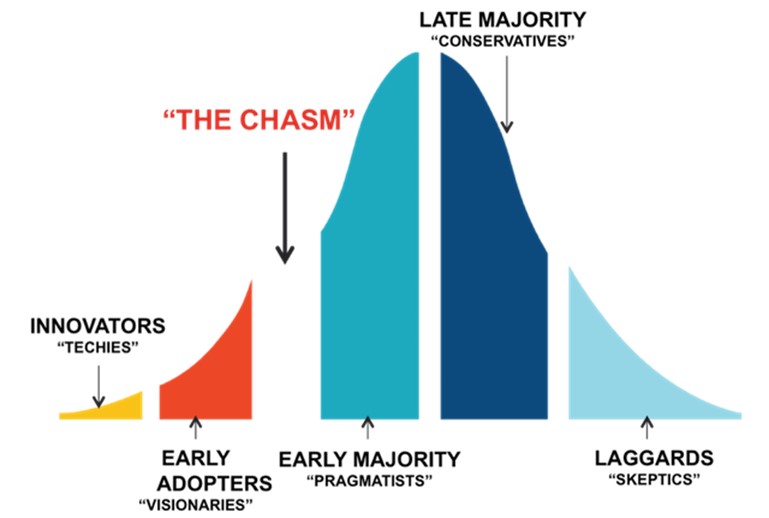
Moore’s model distinguishes innovators, early adopters, the early majority, the late majority, and laggards. The critical strategic point is the gap between people who embrace something because it is exciting and people who need confidence that it is proven
The event adoption lifecycle
1. Innovators — The Carnival insiders
They attend because it’s new, exclusive, or connected to a trusted brand. They don’t need much convincing.
Promotion: First looks, cryptic teasers, insider access, early ticket offers.
2. Early adopters — The experience seekers
They want to be part of the event people will talk about after Carnival.
Promotion: Lifestyle visuals, creator previews, past-event highlights, aspirational storytelling.
3. Early majority — The group decision-makers (this is the point where critical mass is created)
They want a good event, but they also need friends to commit, the details to be clear, and the trip to make sense.
Promotion: Real attendee proof, group packages if available, logistics, FAQs, trusted recommendations.
4. Late majority — The reassurance seekers
They participate when the event feels established, their friends are going, and the risk of missing out outweighs the hesitation.
Promotion: Social proof, clear practical information, genuine ticket deadlines and availability.
5. Laggards — The last-minute or habitual attendees
They may only act when friends are already attending, plans are settled, or the event becomes part of their usual Carnival routine.
Promotion: Final practical reminders, friend referrals, and last-minute conversion messages.
One important distinction: these aren’t fixed personality types. The same person might be an innovator for a fete brand they love and a late adopter for an unfamiliar event in a city where they need to book flights and accommodation.
2. Find the chasm: where event promotion usually breaks down
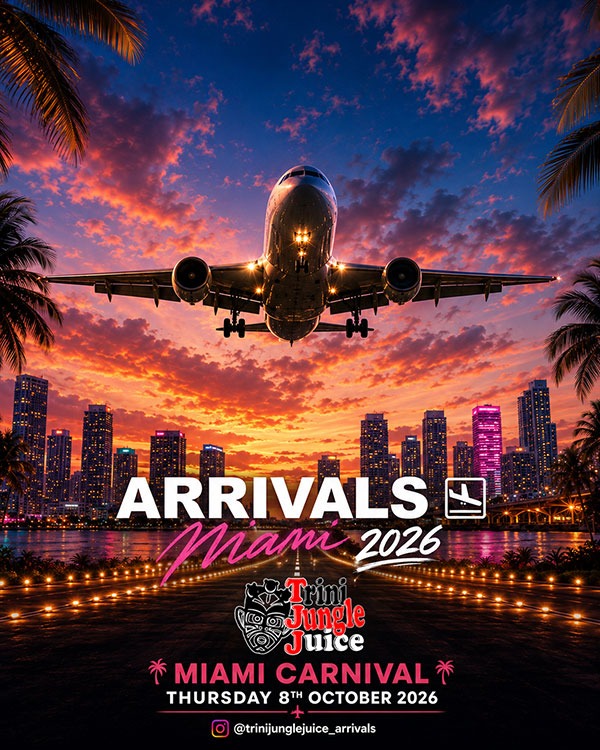
Consider the ARRIVALS concept. Its appeal is not only the party itself. It can be positioned as the opening statement of a person’s Miami Carnival experience, the moment their trip becomes real.
The chasm emerges when early excitement fails to translate into broad commitment.
Early market: “This looks amazing.”
People like the flyer, watch the video, share the announcement, and comment with fire emojis. Your brand advocates may buy immediately.
The chasm: “Let me see what everyone else is doing.”
People wait for friends, compare competing events, question the price, wonder about the atmosphere, or delay travel planning. Engagement looks healthy, but ticket conversion stalls.
Mainstream adoption: “Our whole crew is going.”
The event has credible attendee proof, trusted recommendations, a compelling reason to choose it over alternatives, and a simple path to purchase.
The strategic lesson: don’t assume that more reach, more posts, or more hype will solve a conversion problem. First establish what is stopping the next segment from committing. Moore’s answer is to focus on a specific beachhead and provide the whole product needed to win that segment.
3. Choose a beachhead instead of marketing to everyone
In Crossing the Chasm, the beachhead is the narrowly defined market you aim to win first. For ARRIVALS, I would test this initial segment:
Proposed beachhead: Carnival trip organizers and their crews
A strategic hypothesis to test, not a verified description of ARRIVALS’ current customer base.
Focus on people who are already planning to attend Miami Carnival, influence where their group goes, and want a memorable Thursday experience that starts the weekend properly.
Why this segment?
- They already have a compelling reason to be in Miami.
- Their decision can influence several ticket purchases, not just one.
- They are reachable through Carnival communities, promoters, DJs, masquerader networks, and group chats.
- Once they commit, their friends can use that decision as social proof.The positioning
“ARRIVALS is where your Miami Carnival experience begins — bring your crew, step into the atmosphere, and start the weekend together.”
This positioning sells the job the event does in the customer’s life, rather than just its theme, venue, or lineup.
Validate the beachhead with actual ticket-buyer data. If the strongest buyers turn out to be local Miami partygoers, Caribbean diaspora travelers, or another group, focus on the segment with the clearest demand and strongest referral potential instead.
4. Build the whole product around the ticket
A ticket is only the core product. For someone traveling to Miami Carnival, the full experience includes confidence in the event, coordination with friends, and enough practical information to make the decision easy.
| Whole-product layer | What ARRIVALS promotion should provide |
|---|---|
| Core product | The event itself: atmosphere, music, theme, and entertainment. |
| Expected product | Clear date, time, venue, pricing, ticket terms, and entry details. |
| Augmented product | Attendee videos, trusted endorsements, group coordination tools, travel information, and useful FAQs. |
| Social product | A reason for friends to attend together, share the plan, and feel part of the same experience. |
The exact amenities, ticket benefits, and services should match what the organizers actually offer. Don’t promise transportation, packages, or special access unless they’re confirmed.
The critical shift: stop treating event promotion as a sequence of flyers and start treating it as a system that removes the barriers between interest and attendance.
5. Use a staged promotional campaign
Here is how I would turn the model into a repeatable campaign for a future ARRIVALS edition.
Phase 1 — Ignite the innovators
Objective: Seed the market
- Give brand loyalists and trusted Carnival personalities the first look.
- Release teaser content that makes the concept recognizable and distinctive.
- Measure early ticket purchases, not just likes and comments.
Message: “Miami Carnival starts here.”

Phase 2 — Mobilize the early adopters
Objective: Make the experience desirable
- Show the atmosphere, the crowd, the sound, and the emotional payoff.
- Use authentic footage from previous events where available.
- Activate creators whose audiences actually attend Carnival.
Message: “You don’t want to hear about this one afterward.”

Phase 3 — Cross the chasm
Objective: Turn individual interest into group commitment
- Target the trip organizers and group-chat decision-makers.
- Publish practical information and credible proof.
- Give people a clear way to share the event with their crew.
- Use actual ticket availability and deadlines to support timely decisions.
Message: “Lock in your crew. Make ARRIVALS part of the plan.”

Phase 4 — Trigger mainstream adoption
Objective: Make attendance feel established
- Share genuine attendee confirmations and partner endorsements.
- Retarget people who visited the ticket page but didn’t purchase, where consent and platform rules allow.
- Publish useful final-week reminders and verified event information.
Message: “The crew is set. Here’s everything you need to know.”

Phase 5 — Create the next adoption cycle
Objective: Turn attendees into advocates
- Capture real event footage and testimonials.
- Encourage attendees to share their experiences.
- Follow up with past buyers before the next edition.
- Use actual attendance and customer feedback to improve the next campaign.
Message: “You were there. Bring your people next time.”
The phases should overlap when necessary. The purpose is to match the message to the audience’s readiness, not to prevent people from seeing later-stage content early.
6. Apply Moore’s bowling alley strategy to grow beyond the beachhead
After winning one segment, don’t immediately target everybody. Use the trust and proof created in the first segment to move into adjacent communities.
Beachhead: Carnival trip organizers
Win their crews and demonstrate that the event delivers.
Pin 2: Friends of attendees
Peer recommendations and group attendance.
Pin 3: Carnival travelers
Travel planning, destination appeal, and weekend itineraries.
Pin 4: Local partygoers
Local culture, music, and nightlife communities.
Pin 5: Repeat attendees
Retention, referrals, and loyalty for future editions.
Each successful segment creates the references and relationships that help win the next.
These are possible expansion segments, not a prescribed order. The best next segment is the one most closely connected to the buyers you have already won.
7. Measure adoption, not just attention
The framework becomes useful when each stage has its own measurable outcome.
| Adoption stage | Metrics to track |
|---|---|
| Awareness | Qualified reach, video completion, event-page visits |
| Early interest | Saves, shares, ticket-page clicks, email or SMS sign-ups |
| Beachhead conversion | Purchases, conversion rate, cost per buyer |
| Chasm crossing | Group purchases, referral purchases, conversion among previously hesitant audiences |
| Mainstream adoption | Sales across audience segments, total attendance, referral share |
| Long-term adoption | Repeat purchase rate, returning customers, referrals for the next edition |
One especially useful metric is the interest-to-purchase gap: the proportion of people who demonstrate meaningful interest but don’t buy.
Break that gap down by audience segment, traffic source, and time to purchase. If people engage but don’t convert, investigate the reason before increasing advertising spend.
8. The most important strategic change
Traditional event promotion often follows this pattern:
Announcement → Flyer → Lineup → Influencers → Countdown → Last-minute push.
The Crossing the Chasm approach instead follows this logic:
1 Identify
Find the audience with the strongest reason to attend.
2 Win
Give that audience a compelling, complete reason to commit.
3 Prove
Use real buyers and credible social evidence to reduce hesitation.
4 Expand
Use those buyers to reach adjacent communities.
5 Repeat
Turn attendance into advocacy and future ticket sales.
Trini Jungle Juice Next Steps
Treat ARRIVALS as a repeatable event brand, not just a one-off party. Build a customer-adoption system around each edition:
- Acquire: Bring in new attendees through the most responsive audience segment.
- Convert: Remove the barriers that prevent interested people from purchasing.
- Amplify: Turn attendees into credible advocates who influence the next wave of buyers.
- Retain: Give past attendees a reason to return and bring new people.
One timing note: the linked ARRIVALS Miami 2026 event was listed for Thursday, October 8, 2026, from 5 p.m. to 11 p.m. at Arlo Wynwood. That date has passed as of October 15, 2026, so use this framework to analyze that edition retrospectively or plan the next one.
The central principle is simple: don’t just create demand for the event. Create a sequence in which each wave of attendees makes the next wave more confident about attending.
That is the event-promotion equivalent of crossing the chasm.