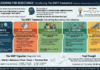

A complete, end-to-end architecture for designing, executing, and adapting strategy.
1. STRATEGIC INTENT
Define the direction and purpose.
1.1 Mission
Why we exist. The contribution we make.
1.2 Vision
Where we are going and what winning looks like in 3–5 years.
1.3 Values
The principles that govern choices, tradeoffs, behavior.
1.4 Strategic Narrative
The story that aligns employees, customers, partners, and investors:
- Who we are
- What we’re building
- Why we’ll win
- What will be different because of us
1.5 Where We Play
Customers, markets, geographies, use cases, price points.
1.6 How We Win
Unique advantage we can sustain:
- Differentiation strategy
- Cost strategy
- Platform strategy
- Experience strategy
- Capability-led strategy
2. VALUE MODEL
Define what customers value and how we deliver it uniquely.
2.1 Customer Insights & Segmentation
Jobs-to-be-done, needs, behaviors, expectations.
2.2 Value Proposition
Why customers choose us vs alternatives.
2.3 Experience Promise
How we delight customers consistently.
(CX-centric strategy; delight, not just satisfaction)
2.4 Revenue & Profit Model
Pricing, margins, AOV strategy, levers for profitable growth.
3. COHERENCE MODEL
The core engine: choices that reinforce each other.
3.1 Strategic Logic Chain
Because (target segment) → We differentiate by (advantage) → Which requires capabilities → Which shapes the operating model.
3.2 Tradeoffs
What we stop doing. Markets we exit. Initiatives we kill.
3.3 Required Capabilities
Capabilities needed to win (technology, distribution, brand, data, product velocity, CX, AI, etc.).
3.4 Management System
Decision-making guardrails, principles, processes.
3.5 Strategy Tests
- Is it feasible?
- Is it unique/differentiated?
- Is it worth it?
- Is it coherent?
4. OPERATING MODEL
Turn strategy into an executable, scalable system.
4.1 Structure
Functions, roles, governance, accountability.
4.2 Processes & Decision Rights
Who decides what, how fast, and based on which data.
4.3 Technology & Architecture
Designed for:
- Reliability
- Observability
- Traceability
- Error tracking
- Data-loss prevention & replay (deltas, logs)
- Deployment strategies (blue/green, canary, rolling, custom patterns)
4.4 Product Development System
Clear goals, tangible paths, openness, transparency.
4.5 Business Architecture
Capabilities → processes → applications → data → roles → KPIs.
5. RESOURCE & PORTFOLIO STRATEGY
Where money, people, and time go.
5.1 Prioritization
What gets funded first, what gets paused, what dies.
5.2 Investment Allocation
Capital, headcount, technology budget.
5.3 Sequencing
In what order initiatives are launched (critical path).
5.4 Portfolio Strategy
Innovation portfolio, run vs grow vs transform.
6. PEOPLE & CULTURE SYSTEM
Strategy lives or dies through people.
6.1 Talent Strategy
Right leaders in right roles.
Right skills in the right teams.
6.2 Culture Design
Culture aligned to strategy (Mintzberg ideological strategy).
6.3 Incentives
Performance systems aligned to strategic priorities.
6.4 Leadership Communication & Influence
Mirror, open-ended questions, recruitment, storytelling, mentorship.
6.5 Personal Leadership Brand Strategy
Every leader defines:
- Identity
- Strengths
- Differentiation
- Influence strategy
7. EXECUTION & MEASUREMENT LOOP
Strategy is only as strong as its execution and learning system.
7.1 North Star Metric
Single measure of value creation.
7.2 Input Metrics
Drivers that lead to the North Star.
7.3 Quarterly OKRs
Clear, measurable commitments.
7.4 Operating Rhythm
Monthly reviews, quarterly strategy recalibration, weekly dashboards.
7.5 Hypothesis → Experiment → Feedback → Learn
Continuous strategic adaptation.
CX insights feed improvements.
AOV improvements driven by customer behavior data.
8. RISK & ADAPTATION STRATEGY
Prepare for what will likely go wrong.
8.1 Assumptions & Vulnerabilities
What must be true for this strategy to work?
8.2 Early Warning Signals
Metrics indicating strategic failure.
8.3 Response Paths
Plan B, mitigation, pivots, kill criteria.
8.4 Strategic Resilience
Energy (Supply), Demands, Values, Contexts.
Personal resilience strategy: recovery, therapy, exercise, structured routines.
Organizational resilience: redundancy, buffers, scenario planning.
9. STAKEHOLDER STRATEGY
Align the people who matter most.
9.1 Customers
Needs, expectations, pain points.
9.2 Employees
Engagement, clarity, ownership of the operating plan.
9.3 Partners
Ecosystem leverage, platform strategy.
9.4 Regulators / Community
Social responsibility (“should do” strategy).
9.5 Investors / Board
Relationships, communication strategy, confidence-building.
10. EXECUTIVE PLAYBOOK
Practical routines for leaders.
- Selecting teams with intentionality
- Mastering strategy, people, operations
- Rigorous preparation (argument runbooks, structured thinking, power plays)
- Walking the floors, interviewing role incumbents, networking
- Personal playbook for scaling, positioning, and influence
- “One winning strategy—until it stops working”
A Unified Framework for Competing, Operating, Leading, Scaling, and Adapting
Strategy is not one thing. It is a stack—from mindset to execution—that aligns where you compete, how you win, what you build, how you operate, and who you become.
Below is the consolidated, integrated approach.
I. STRATEGIC MINDSET & PRINCIPLES (THE FOUNDATION)
This is the mental operating system for all strategy.
1. Strategy = Coherent Choices for Winning
- Strategy is not a plan.
- Strategy is an integrated set of choices about where you play, how you win, and what capabilities you build.
- It requires internal cohesion: every part must reinforce the others.
2. Elevate above the battlefield
Strategy requires stepping above daily noise to see:
- the environment (external forces)
- your strengths (can do)
- your values (want to do)
- your societal obligations (should do)
- possibilities (might do)
3. Adaptability > Perfection
- Only one winning strategy is needed — until it stops working.
- Strategy must evolve with industry cycles, competitors, and customer expectations.
- Flexibility in execution preserves long-term stability.
4. Culture is strategy
- Culture determines execution, speed, adaptability, and how people behave under pressure.
- If culture and strategy conflict, culture always wins.
II. STRATEGY DIAGNOSTIC: UNDERSTAND WHERE YOU PLAY
This aligns Porter, Mintzberg, and customer-centric principles.
1. Industry & Competitive Forces
Understand:
- competitors
- suppliers
- customers
- substitutes
- rivalry intensity
Industries evolve; strategies must reflect stage (growth, fragmentation, globalization, decline).
2. Customer-Centric Positioning
A modern strategy must be built around customers:
- pain points
- expectations
- RFM behavior
- drivers of delight
- AOV behavior
A CX-centric strategy correlates with significantly higher long-term returns.
3. Competitive Advantage & USP
Answer:
- Why do customers come to us?
- What do we do that no one else can?
- How do we differentiate or lower cost?
4. Financial Reality
Strategy must tie to key metrics:
- EBIT
- EBITDA
- Gross margin
- Customer metrics (AOV, usage, adoption)
III. CHOICE ARCHITECTURE: DECIDE HOW YOU WIN
This is the heart of integrated strategy.
1. The Four Essential Questions
- Where will we play? Segment, region, customer, product.
- How will we win? Differentiation, cost, platform, experience.
- What capabilities must exist? Systems, people, processes, architecture.
- What management systems support them? Incentives, metrics, culture.
2. Platform & Ecosystem Strategy (if applicable)
Understand platform dynamics (eBay, Uber, Airbnb):
- matchmaking
- liquidity
- trust
- network effects
IV. OPERATING STRATEGY: TURN CHOICES INTO ACTION
This is where strategy becomes real.
1. Clear Goal + Tangible Steps
Operational strategy must:
- define one clear objective
- outline exactly how to achieve it
- assign responsibilities & accountabilities
- measure progress with real metrics
2. Fair, Open, Cross-Functional Creation
A strategy created in isolation will not be executed.
People execute the part of the strategy they helped build.
3. Execution = People × Strategy × Processes
- Right leaders in right roles
- Clear operating link between strategy and budget
- Talent density matters: “Your best strategy is a busload of great people.”
4. Deployment, Risk & Reliability Strategy
- Capability architecture (roles, apps, processes)
- Manageability & traceability
- Data-loss strategy & replayability
- Deployment strategies (blue/green, canary, rolling) for safe change
- Envelope encryption for security
V. CUSTOMER, MARKET & GROWTH STRATEGIES
Integrating marketing, product, and expansion principles.
1. Marketing as Science
Modern marketing requires:
- data
- experimentation
- feedback loops
- storytelling that communicates value transformation
2. Product Strategy
Product teams must know:
- business strategy
- product vision
- market needs
- prioritization based on value
Product leaders spend time on: - coaching
- staffing
- selecting high-value opportunities
3. Scaling Strategy
Scale through:
- systems
- decision-making frameworks
- repeatable processes
- focus on the few things that move the needle
4. Global Expansion
- Don’t exceed quality or capability limits
- Track new logo acquisition & new product usage
5. Diversification & Co-opetition
- Track adoption rates in new segments
- Manage internal friction (sales often resist co-opetition)
VI. PERSONAL & LEADERSHIP STRATEGY
Leaders execute strategy; therefore leaders must have one personally.
1. Personal Leadership Brand Strategy
Define:
- strengths
- mission
- desired perception
- communication strategy
- network building
2. Resistance/Resilience Strategy
Includes:
- energy sources (supply)
- role demands
- values
- external/internal conditions
May require periodic structured recovery or LOA.
3. Strategic Time Management
- Daily 10–15 minute priorities ritual
- Replace reaction with strategy
- Understand when to fight, pause, or walk away
4. Mentoring Strategy
Use open-ended questions, mirroring, and curiosity to:
- reveal motivations
- sharpen thinking
- build trust
VII. STRATEGIC EXECUTION & REVIEW LOOP
Strategy must become a living system.
1. Strategic Planning Framework
- External landscape & trends
- Customer needs & market fit
- Profitable growth opportunities
- Competitor assessment
- Capability assessment
- Milestones (short + long-term)
- Balanced execution plan
2. Reality-Based Strategy Review
Avoid “fat plan on a shelf.”
Review must address:
- what competitors are doing
- whether execution ability matches ambition
- if ideas are scattered or coherent
- clarity of accountability
3. Dealing With Gaps
Decode gaps to understand:
- directional changes
- defensive plays
- opportunities for momentum
4. Continuous Adaptation
Use metrics:
- customer delight
- AOV shifts
- product usage
- adoption in new segments
- employee adaptability
- operational performance
When conditions change, strategy changes.
VIII. STRATEGIC MINDSET PRACTICES (THE HUMAN SIDE)
These principles strengthen strategic clarity.
- Hope is not a strategy.
- Planning is not strategy; planning controls what you can control, but strategy manages what others (customers, competitors) control.
- Someone out there is always strategizing to beat you.
- Leadership presence = assumptions + communication strategy + energy alignment.
- Strategy requires intention, not reaction.
- Observation, purpose, and strategic thinking create more success than luck.
- Great vision without great people is irrelevant.
- “Yes, I’ll try” is not a strategy—commitment is.
THE INTEGRATED STRATEGY SYSTEM IN ONE SENTENCE
Strategy is a coherent set of choices—grounded in customer insight, competitive reality, cultural strength, and operational capability—executed by aligned people through disciplined processes and continuously adapted as conditions change.