Influence Without Authority: How Great Architects Shape Decisions and Deliver Outcomes
You don’t have to own the decision to lead the outcome.
The hardest part of being an architect isn’t designing a good solution. It’s getting people to back it.
You can spend weeks on requirements, dependencies and risks, then walk into a design authority meeting with clean diagrams and a sound recommendation. And the room can still choose something else.
I once pitched to an MD and his engineering team a data technology stack that would provide missing lineage and offer more compute power where they were hitting the celing. While it was technically sound and I presented why technically all the reasons he should adopt it. He listened but chose differently at the time,
Would I have approached it differently? Well the story ends well, he would not adopt it for another year but he did in the end. I did learn some valuable lessons in the long game.
When I looked back at decisions like that, the lesson was rarely that my design was wrong. It was that the decision had been made before the meeting started, in hallway conversations, in budget priorities, and in who trusted whom. I had prepared the architecture. I hadn’t prepared the people and my timing I suspected was off.
That gap matters more the higher you go. As decisions get bigger, the issues become more ambiguous, the people around the table have stronger views, and data alone stops settling arguments. Decisions become less about authority and more about influence.
Architects rarely own the budget, the backlog or the people. We work through relationships, not hierarchy. This article lays out how to do that deliberately.
The Architecture Influence Loop
Influence isn’t a single meeting. It’s a loop I run on every significant decision: Understand → Visualize → Align → Decide → Enable → Deliver & Learn, then back to Understand as the business changes.
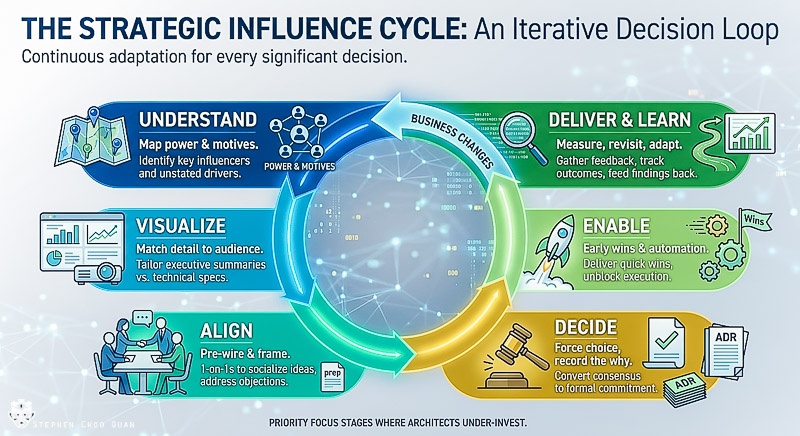
The rest of this article walks through each stage. The order matters: most architects jump straight to Visualize and Decide, and skip the two stages where influence is actually won — Understand and Align.
1. Understand: map the influence landscape
Before you design the solution, map the people who will decide whether it happens. The org chart tells you who has authority. It rarely tells you who has influence.
Find where the power really sits
In your next few architecture reviews, watch who defers to whom. When a hard question is asked, where do people’s eyes go? That person may not chair the meeting, but their nod is the one that counts.
Influence in most organizations comes from a handful of sources:
- Expertise — the engineer everyone trusts on the legacy platform.
- Control of information — whoever owns the roadmap, the metrics or the vendor relationship.
- Connections — people who sit between groups and carry messages.
- Control of resources — budget, headcount, environments.
- Personal loyalty — long-standing relationships that predate you.
Identify your winning and blocking alliances
For each significant decision, ask two questions. Whose support do I need for this to move forward? And who, acting together, has the power to say no?
The second question is the one architects skip. A security lead, a platform owner and a finance partner may each have a mild concern. Together, they are a blocking alliance — and they will surface in the meeting, not before it, unless you go and find them.
Learn what each person actually needs
A product owner may be racing a market deadline. An engineering lead may be worried about capacity. A finance partner may care only about run-rate cost. They’re looking at the same problem through different lenses, and it is rarely only about the money or the technology. Often it’s about ego, credibility or not being made to look bad.
Ask:
- What business outcome are we trying to achieve?
- What constraints are driving the current approach?
- What does each stakeholder stand to gain or lose?
- What happens if we do nothing?
Knowledge is your best leverage. The architect who understands the business pressures better than anyone else in the room is the hardest to argue with.
Don’t mistake resistance for opposition
When you meet pushback, probe for the reason before you label someone an adversary. People usually resist change for one of five reasons:
- They’re comfortable with the status quo.
- They fear looking incompetent with the new approach.
- The change seems to threaten values they care about.
- It threatens their power or decision rights.
- It hurts people they feel responsible for.
Each one calls for a different response. A team worried about looking incompetent needs a learning path, not a better diagram. If you’re met with stony silence, you’ve probably stepped on someone’s values or position — that’s the signal to stop presenting and start listening.
Choose where to spend your influence
Influence is a budget. Spend it on decisions that are architecturally significant: ones that change the system’s structure, its interfaces, its quality attributes (security, performance, availability), its dependencies, or how it is built and run. Let teams own the rest. An architect who fights every library choice has nothing left for the decisions that matter.
2. Visualize: make the architecture visible
A good diagram is the fastest way to create shared understanding. It is also an influence tool: people can only support what they can picture.
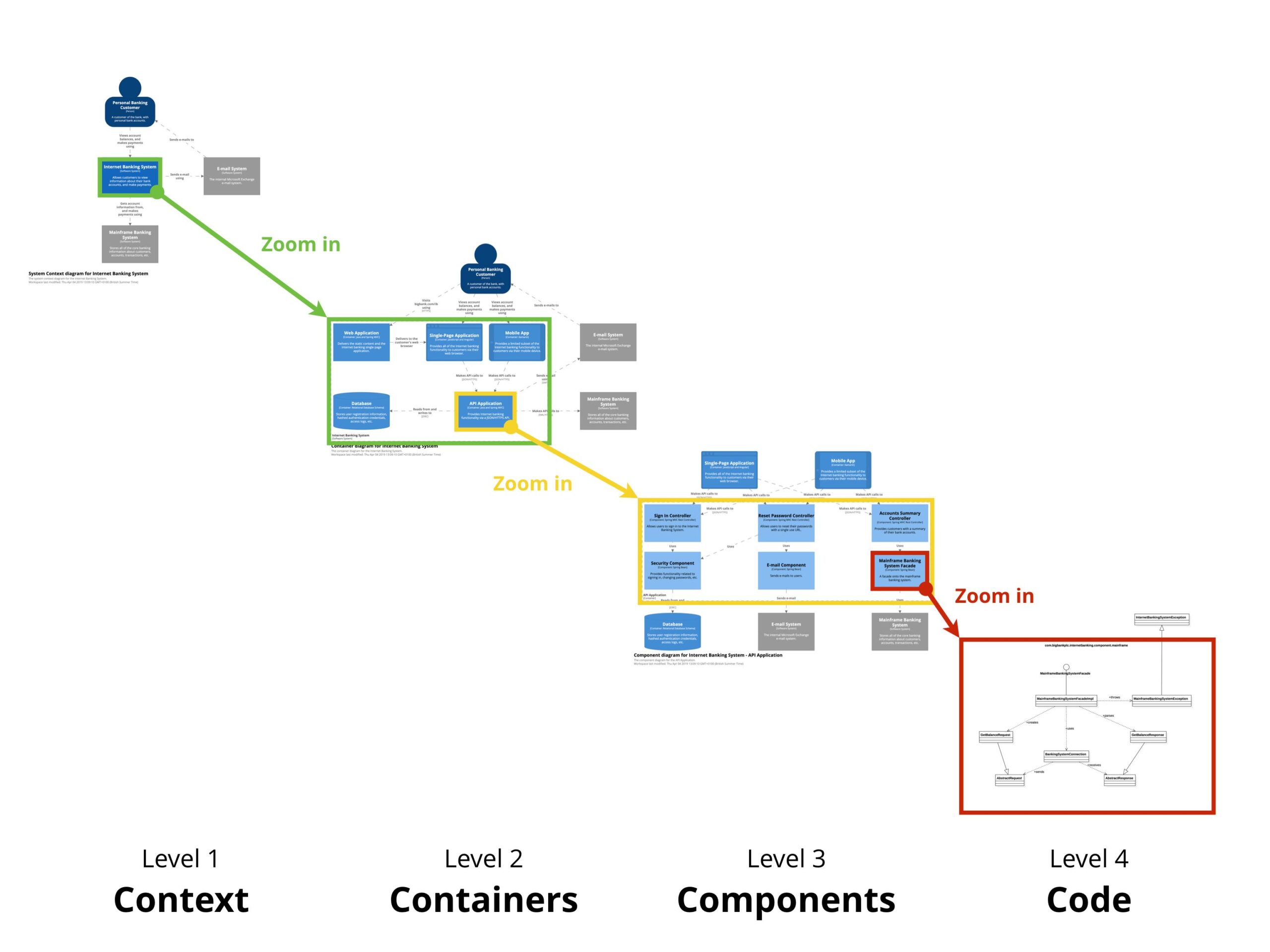
Simon Brown’s C4 model is a practical way to match the level of detail to the audience:
- Context — how the system fits with users and other systems. This is the executive view.
- Container — the major applications, services and data stores.
- Component — how responsibilities are divided inside a container.
- Code — implementation detail, rarely needed in a decision meeting.
Use progressive revelation: start with the big picture and add detail only when it answers someone’s question. Executives need capabilities, cost, risk and dependencies. Engineers need boundaries and interfaces.
Don’t fall in love with the artifact. A diagram that took three weeks isn’t better than one drawn the day before and refined as understanding grows. Its job is to help people decide, not to show how hard you worked.
3. Align: win the decision before the meeting
The design authority meeting should ratify a decision, not make it. If anyone in the room is hearing your recommendation for the first time, you’ve already taken a risk.
Pre-wire, one conversation at a time
Meet the key stakeholders individually before the formal review. Share the draft, ask what concerns them, and adjust. Objections raised one-on-one are questions; the same objections raised in front of peers become positions people feel they must defend.
Be strategic about the order. If you win over the most respected voice first, others follow more easily. Sequencing turns one early supporter into momentum.
Consult before you persuade
Ask questions, let people voice their real concerns, then play back what you heard. Good consultation builds buy-in on its own, and it often reveals that the objection isn’t the one you expected. The more specific they get about their concerns, the more you should listen.
Frame it in their currency
The same recommendation needs a different frame for each person. The classical structure still works:
- Ethos — principles, standards and policy. “This aligns with our resilience standards.”
- Pathos — meaning and emotion. “This is the outage our customers felt last spring.”
- Logos — data and reasoning.
Architects tend to lead with logic and stop there. For a finance partner, lead with run-rate cost. For a product owner, lead with time to market. For a risk officer, lead with exposure.
Pick a few core themes and repeat them consistently, without sounding like a parrot. Restate them in new ways and add something each time. You’ll know it’s working when other people start using your words.
Make the trade-offs visible
There are rarely perfect solutions. Shift the question from “Which technology is better?” to “Which option best serves the business within the constraints we have?” Lay out what each option gains and gives up across value, cost, timeline, risk, performance, reliability and operability.
A recommendation becomes far more persuasive when people can see what they’re giving up as well as what they gain.
Shape the choice, not just the argument
Sometimes the obstacle isn’t your option; it’s that doing nothing looks safest. Picture a director who can simply delay, raise objections and wait for your initiative to lose momentum. To him, the status quo costs little and protects his budget, while your proposal looks risky with a vague payoff.
More arguments won’t move him. Changing how the alternatives look will. Make the real cost of the status quo visible (the incident trend, the audit finding, the end-of-support date). Make your option safer by offering an incremental path — a pilot or a first phase — instead of one big leap. People will often take a series of small steps they would never take in a single jump.
Turn disagreement into joint problem-solving
Telling people their design is risky rarely makes them receptive. Inviting them to find the risks with you does. Risk storming gives this a structure: the group identifies risks individually, builds consensus on which matter, then agrees on mitigations and owners. Focus each session on one dimension, such as security or resilience, to cut the noise.
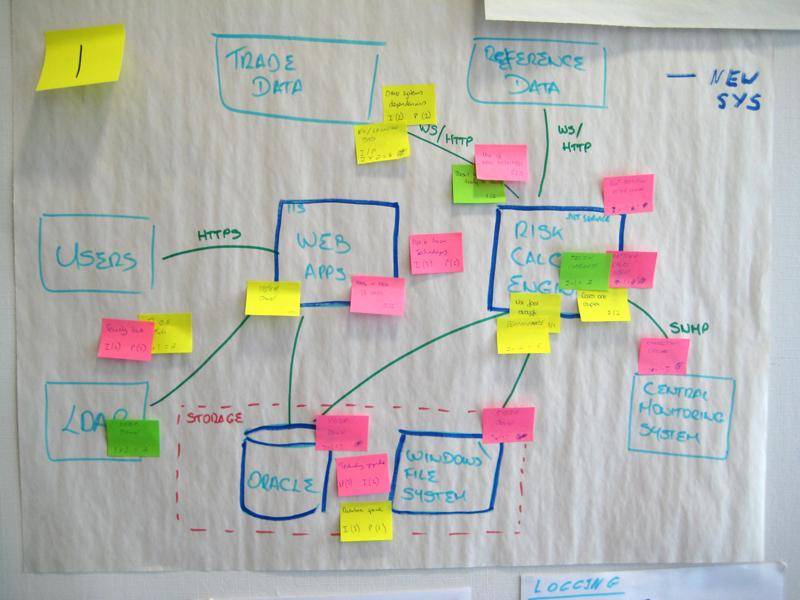
The shift is from “Your design has a problem” to “What risks should we address together?” People support what they help build.
A few rules from the negotiating table
Architecture alignment is a negotiation, and the same habits apply:
- Look for deal makers, not deal breakers. Stay broad and exploratory; hypothetical options keep doors open.
- Never say what you will never do. It limits your options and tells the other side exactly where to push.
- Get comfortable with silence. Experienced negotiators let it sit. Rushing to fill it usually means conceding something.
- Never criticize in public. A grievance aired in front of someone’s peers creates a defender, not a convert.
- Avoid setting up sides. A formal “us versus them” table puts on game faces. A whiteboard with everyone on the same side works better.
- Be likable, but don’t need to be liked. Warmth opens doors; needing approval gives your position away.
- Look for alliances of convenience. You don’t need to agree with someone on everything to align on this one decision.
4. Decide: force the decision and make it stick
Alignment that never becomes a decision is just goodwill. Two things kill decisions: nobody forces them, and nobody remembers them.
Create action-forcing events
People defer hard choices until something makes them choose. Review dates, funding gates, vendor deadlines and steering meetings all create the pressure to commit. When a decision needs several groups to act together, one person’s delay cascades — so set the date, put it in front of the people who own it, and hold to it.
Write the first draft
Whoever writes the first draft sets the terms of the discussion. Draft the decision record yourself, so the framing, the options and the trade-offs are in your words. The exception: if someone else knows the domain better, let them draft and learn from it.
For stakeholders who won’t engage, send a short summary of the decision and its consequences, and ask them to confirm or respond by a date. Silence then becomes a choice they made.
Capture the why with an ADR
Architecture Decision Records prevent three familiar traps that Mark Richards and Neal Ford describe: delaying decisions out of fear of being wrong (“Cover Your Assets”), re-debating decisions because nobody can find the reasoning (“Groundhog Day”), and burying decisions in email threads (“Email-Driven Architecture”) or Decision Corrosition.
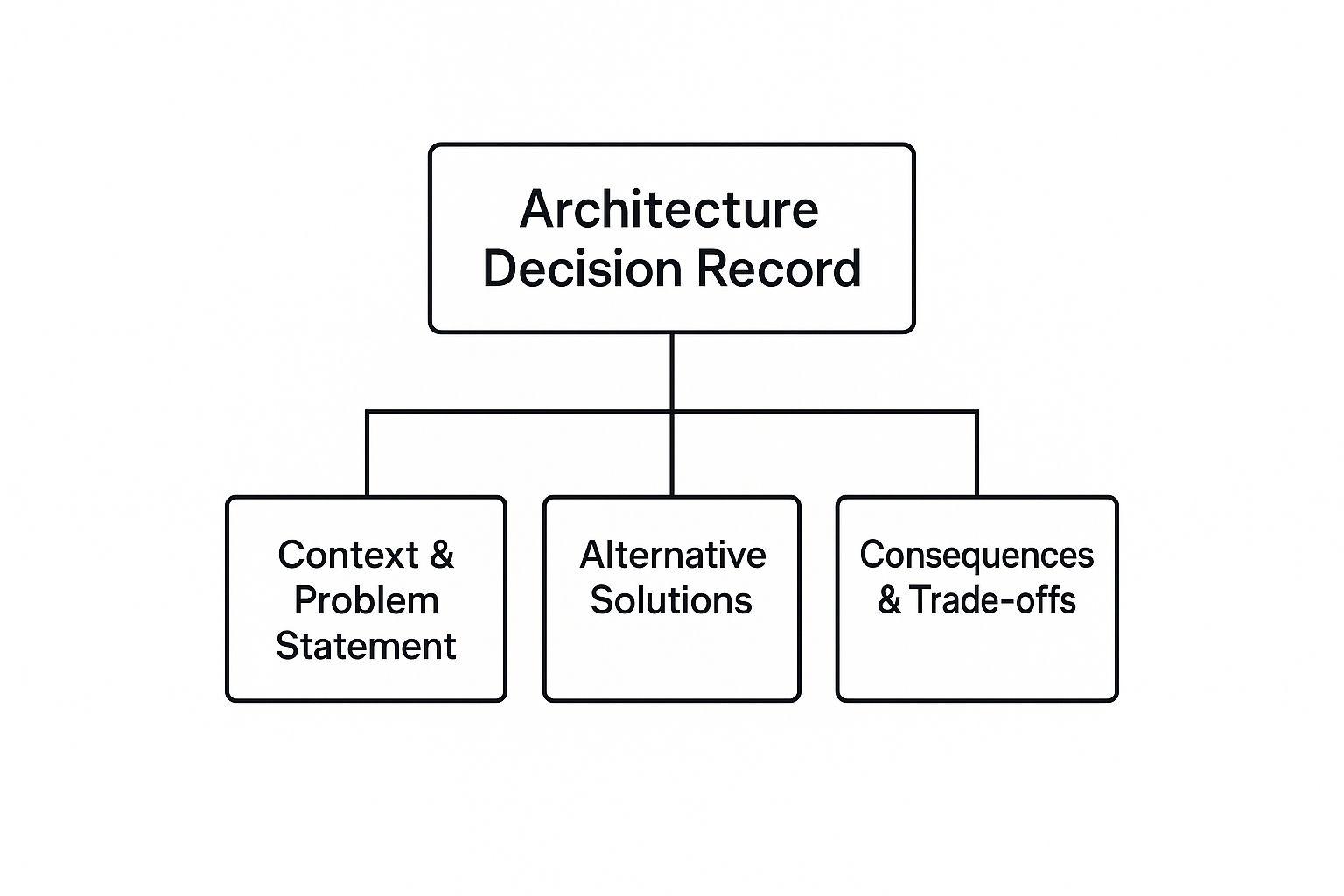
A good ADR records the context, the decision, the alternatives considered, the consequences and the owner, with a status of Proposed → Accepted → Superseded. Its real value isn’t what was decided. It’s why — the institutional memory that stops the same argument from coming back every quarter.
Watch what you say after the decision
What you say after a decision is made matters more than everything you said before it. Thank the people who compromised. Credit the ideas that came from others. Never gloat about winning. The next decision starts here.
[DOWNLOAD] one-page ADR template, signup for the newsletter.
5. When you don’t get your way
This is the real test of influence. You can do everything above and still lose the decision. What you do next determines whether you have more influence or less the next time.
Separate preference from material risk
Not every decision that differs from your recommendation is a governance failure. If the decision owner understands the consequences and chooses a legitimate alternative, respect it — disagree and commit.
Material security, regulatory or operational risk is different. That goes through the proper escalation path, calmly and on the record, never as a public grievance.
Either way, close the loop
- State your recommendation clearly, once.
- Record the alternatives and consequences in the ADR.
- Make sure accountability for the risk is explicit.
- Agree on any mitigation and who owns it.
- Build in a revisit trigger: “We’ll reopen this if latency exceeds X or volumes double.” It turns a loss into a checkpoint, not a closed door.
Then help it succeed
The architect who quietly hopes the chosen option fails loses the room for good. The one who helps make it work earns the credibility to win the next one.
This is also where your best stories come from. A skeptic who becomes an ally is one of the most powerful stories an organization tells about itself. So is a struggling team that you helped succeed on a path you didn’t choose.
I have presented many options and have been overruled but each time I helped to make the new decision succeed, it was noticed by the decision maker. It allowed me to make his leadership team and that is worth more than winning an architecture decision.
Your job is not to win every argument. It’s to help the organization make informed decisions and protect the outcomes that matter.
6. Enable, deliver and learn: build credibility you can spend later
Influence is earned on delivery and spent on decisions. Everything in this stage fills the account you’ll draw on next time.
Secure early wins
Credibility comes from visible, measurable results. Early in any new role or program, look for wins that matter to the people whose support you need — ideally aligned with your manager’s top priorities. Remove the small irritants that slow teams down; a team that believes you understand its pain will back you on bigger things.
Underpromise and overdeliver. Deliver more than you promised and you build trust. Promise too much and fall short, and you’ve failed in their eyes even if you achieved a lot.
Practice elastic leadership
Adjust how closely you guide a team to the situation. Roy Osherove calls this elastic leadership. A new team on a complex, high-risk program needs more direction; an experienced team inside clear boundaries needs room. Too little involvement leaves teams without direction. Too much creates dependency and frustrates capable engineers.

Stay connected to the work — proofs of concept, technical debt, the occasional code review. The armchair architect loses credibility with engineers fast, and engineers’ trust is a source of influence of its own.
Let automation carry your influence
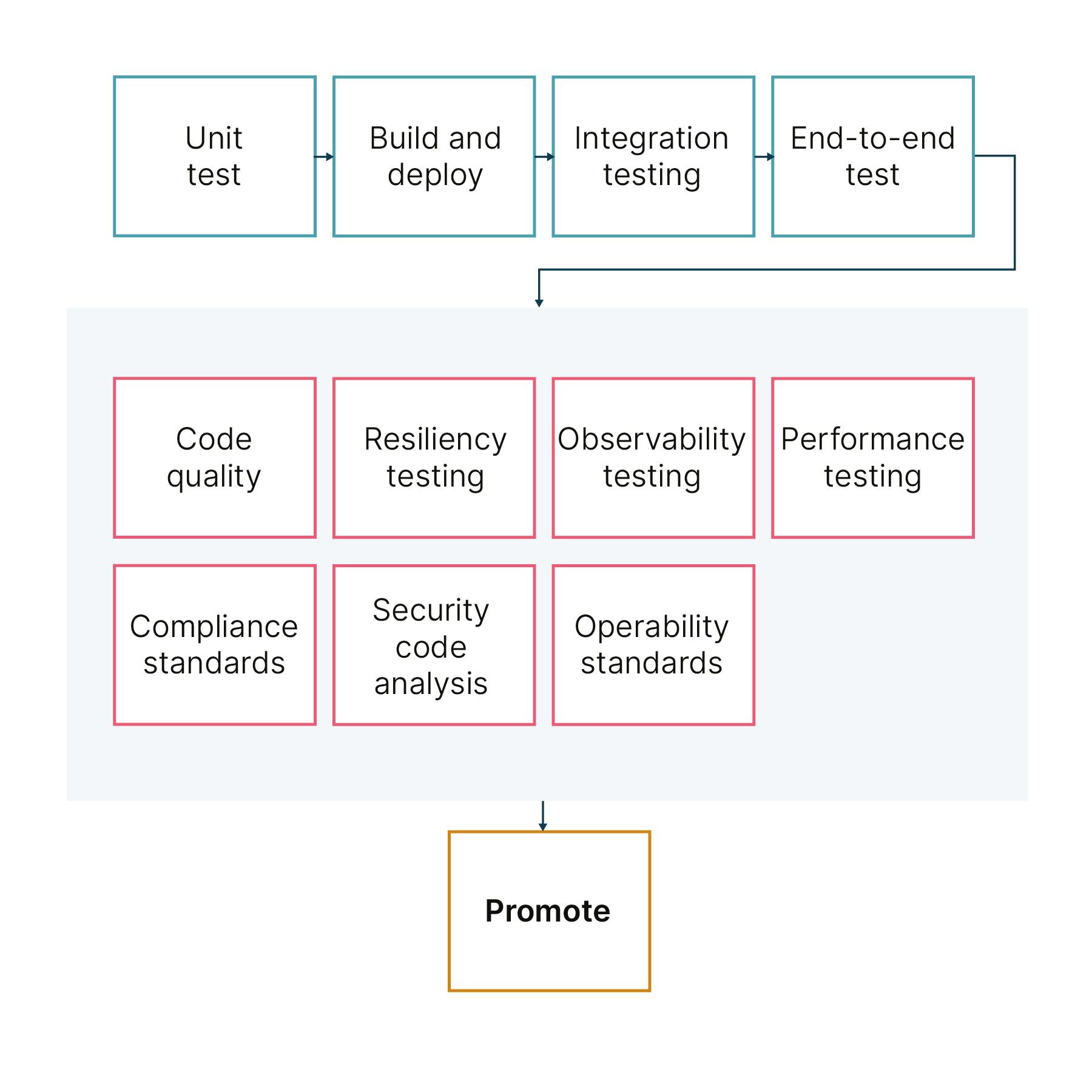
You can’t be in every room. Turn the architecture characteristics that matter into fitness functions — automated checks for API compatibility, dependency rules, performance thresholds and security policy. Influence that lives in the pipeline scales; influence that depends on your presence doesn’t.
Remember who builds the system
Conway’s Law reminds us that systems mirror the communication structures of the organizations that build them. Sometimes the architectural problem isn’t the technology; it’s how teams are organized. Influencing team boundaries and ownership is often the highest-leverage architecture work you can do.
(Fitness functions, ADR practice and Conway’s Law each deserve a full article. I’ll go deeper on them in a follow-up: “Making Architecture Decisions Stick.”)
The habits underneath it all
Mark Richards describes the architect’s communication discipline as four Cs. I’d adapt them slightly for influence:
- Clear — explain decisions in language your audience uses, not buzzwords meant to dazzle.
- Concise — respect people’s time; lead with the recommendation.
- Consistent — say the same thing to every stakeholder, framed for them. Influence collapses the moment people compare notes and find different stories.
- Collaborative — be available, listen, and help others succeed.
They sound simple. They’re hard to practice every day, under pressure, with people who disagree with you.
Final thought: lead the outcome, not just the design
The best architects do more than design systems. They understand the people behind a decision, prepare the ground before the meeting, shape the choices people see, and keep their credibility intact when a decision goes the other way.
Technical knowledge earns you a seat at the table. Trust, preparation and the ability to bring people with you are what make you influential once you’re there.
You don’t have to own the decision to lead the outcome.
If this was useful, subscribe to the newsletter for the follow-up on making architecture decisions stick, and share the one influence tactic that has worked best for you in the comments.
Further reading
- Mark Richards and Neal Ford, Fundamentals of Software Architecture — architecturally significant decisions, ADR antipatterns, risk storming, the four Cs.
- Neal Ford, Rebecca Parsons and Patrick Kua, Building Evolutionary Architectures — fitness functions.
- Simon Brown — the C4 model and risk storming.
- Roy Osherove, Elastic Leadership.
- Michael D. Watkins, The First 90 Days — alliance building, sources of influence, framing, sequencing and action-forcing events.
- Mark McCormack, On Negotiating